


Oct 15, 2024
Volumetric Weight Knowledge Base
Understanding Volumetric Weight in Shipping
Understanding Volumetric Weight in Shipping

In the world of shipping and logistics, understanding how shipping costs are calculated is crucial. One key concept that often confuses people is Volumetric Weight. Let's dive into what it is, how it's calculated, and why it matters.
What is Volumetric Weight?
Volumetric Weight, also known as dimensional weight, is a pricing technique used by shipping carriers to determine the cost of transporting packages. It takes into account the package's volume in addition to its actual weight.
How is Volumetric Weight Calculated?
The Formula:
Volumetric Weight = (Length x Width x Height) ÷ 4000
- Length, Width, and Height are measured in centimeters (cm)
- The result is in kilograms (kg)
- 4000 is the standard divisor used by many carriers (may vary)

This calculation gives shipping companies a way to charge based on the space a package occupies in their vehicles, rather than just its weight.
Volumetric Weight vs. Dead Weight
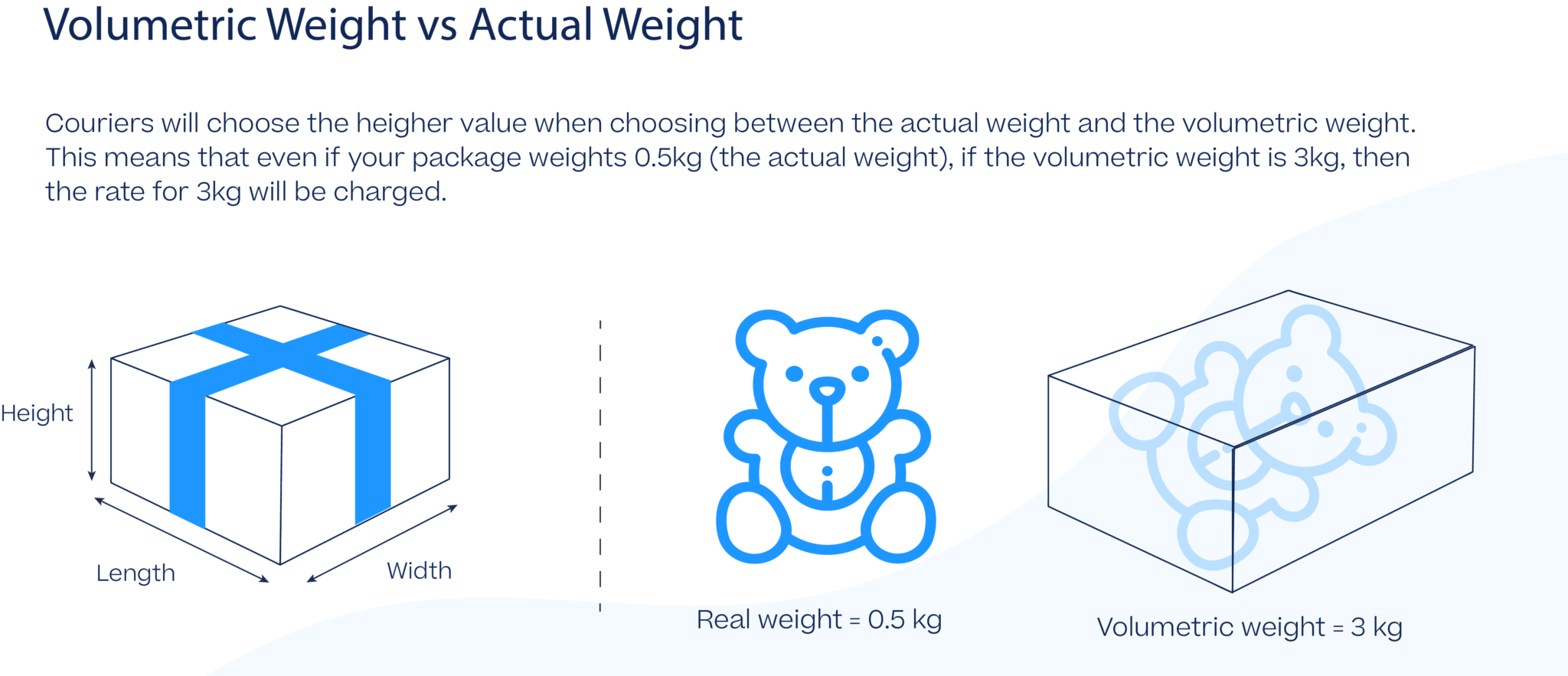
Dead weight, also known as actual weight, is simply how much the package weighs on a scale. Carriers will typically charge based on whichever is greater: the volumetric weight or the dead weight.
Volumetric Weight
- Based on package dimensions
- Accounts for space occupied
- Useful for light but bulky items
Dead Weight
- Actual weight of the package
- Measured on a scale
- Typically used for dense, heavy items
Why Does This Matter?
Understanding volumetric weight is crucial for businesses and individuals shipping goods. It helps in:
- Accurately estimating shipping costs
- Optimizing packaging to reduce expenses
- Choosing the most cost-effective shipping methods
Tips for Optimizing Your Shipping
- Use appropriate box sizes to minimize empty space
- Consider using flat-rate shipping for heavy, small items
- Compare different carriers' volumetric divisors
- Use a shipping calculator to estimate costs before sending

By understanding the concept of volumetric weight and how it differs from dead weight, you can make more informed decisions about your shipping strategies. This knowledge can lead to significant cost savings and more efficient logistics operations.
Key Takeaway:
Remember, in the world of shipping, sometimes it's not just about how heavy your package is, but how much space it takes up!